
How to Check Criminal History in Taylor County
Begin with the record's custodian. The Taylor County Clerk holds filed criminal cases and final dispositions. TCSO publishes current jail and recent-arrest information, keeps county deputy reports, and routes public-record requests. Perry Police keeps reports made by city officers. FDLE CCHInet supplies a paid statewide name search, while FDC covers state prison and community supervision. Gather a full legal name, aliases, date of birth, approximate event date, agency, and any case or booking number before searching.
No one system is complete. A jail result is a custody snapshot, a clerk file is one prosecution, and an FDLE record joins reportable cycles from agencies across Florida. Compare identifiers and dates before deciding records concern the same person.
Write down the search date and exact spelling used. If an arrest appears without a later outcome, request the Taylor County disposition from the clerk. A certified copy can support FDLE's personal review or challenge process when an agency cycle lacks the court result. If the person is in state custody, search FDC by DC number when possible. For a current county detainee, use TCSO instead. These checks prevent a common mistake: reading silence in one system as proof that nothing happened in another.
- Ask the Taylor Clerk for the case index and disposition.
- Check TCSO for recent custody, bookings, and warrants.
- Request the narrative from TCSO or Perry Police, whichever made the report.
- Use FDLE for statewide history and FDC for state custody or supervision.
- Order a certified clerk disposition when an official outcome must be proved or corrected.
Taylor County's Downtown Records Hub
The courthouse at 108 North Jefferson Street in Perry concentrates Circuit and County Court clerk service, the County Judge, and TCSO administration in one downtown address. The jail and State Attorney are separate custodians. Ask the criminal division for felony, misdemeanor, or criminal-traffic files and call 850-838-3506 before travel. Older records and certified copies are best handled at the counter.
The Taylor County Clerk gateway identifies the court services available from the office.
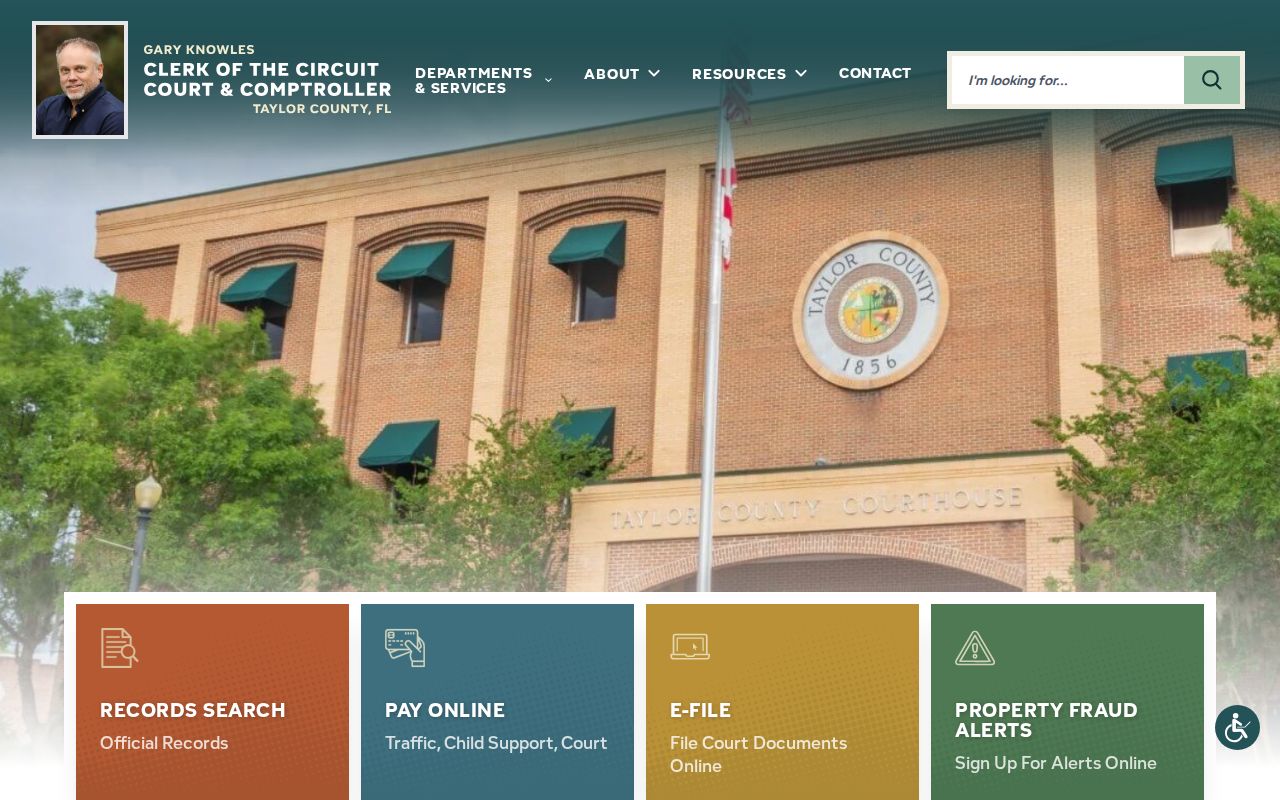
The clerk source is the route to filed charges, docket events, judgments, and sentences, not to jail intake data.
Official Florida Background Checks
The Florida Department of Law Enforcement Criminal History Services maintains the state repository. CCHInet accepts public name searches for $24 plus the stated $1 card-processing fee. Results often return quickly, but a name match is not fingerprint-confirmed and covers Florida reporting rather than a nationwide FBI record.
For personal review and positive identification, use FDLE's fingerprint process through an approved LiveScan provider. The FBI Identity History Summary is a separate subject-only federal route. Appointment rules, ORI number, price, and purpose depend on the receiving agency.
Choose the official channel based on the question. CCHInet is useful for a public Florida name search, but it can return possible matches that require careful review. FDLE's personal record-review process lets a person inspect a fingerprint-linked Florida record and challenge an error. The FBI process reaches federal identity-history material and records submitted from participating jurisdictions, yet it is available to the subject rather than as an open public name tool. None of these routes replaces Taylor County source documents. When a statewide cycle lacks the final result, the clerk's certified disposition is the key evidence linking the court outcome back to the reported arrest.
Taylor County Names in CCHInet
CCHInet asks for last and first name, with middle name, birth date, race, and sex available to narrow a possible match. The fee applies per search, not per confirmed identity. Save the result during the session and compare each cycle with Taylor Clerk dispositions.
| Field | Use |
|---|---|
| First and last name | Required name search |
| Middle name | Separates similar names |
| Date of birth | Strong identity check |
| Race and sex | Optional match filters |
The official FDLE interface shows the current search workflow.
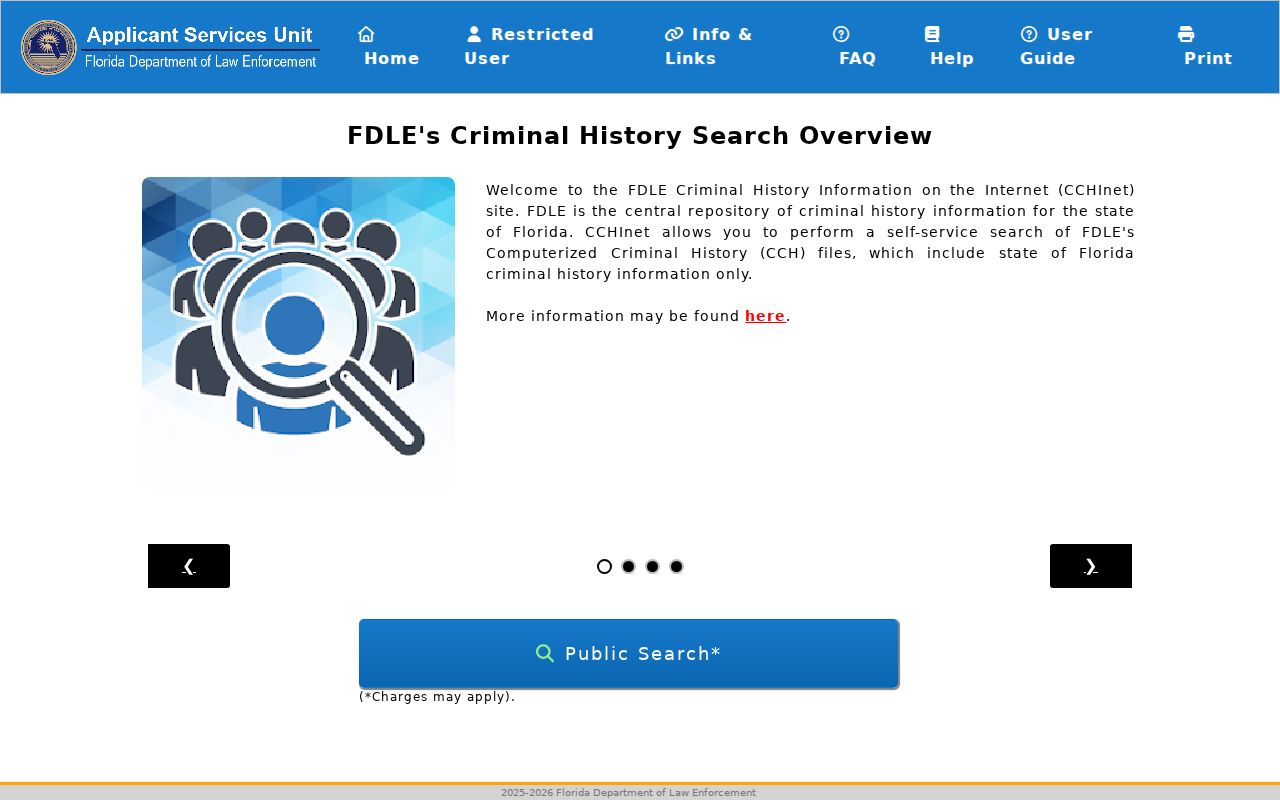
Use the portal as a statewide layer, not as a substitute for the Taylor County case file.
Types of Criminal Records
Taylor County records divide by event and custodian. An arresting agency writes the incident and probable-cause narrative. Jail staff create a booking file. The State Attorney decides which charges to file, and the clerk preserves the court case. FDLE assembles reportable Florida cycles. FDC maintains state custody and felony community-supervision data.
Incident reports and booking sheets should not be merged. The report describes what the officer says occurred and why enforcement action followed. The booking sheet records intake, the arresting agency, charges received by the jail, bond, and release or transfer status. After review, the State Attorney may decline, add, reduce, or amend those counts. The clerk's docket then shows the filed accusation, arraignment, motions, plea or trial, judgment, and sentence. A warrant adds another layer: the sheriff may publish an active entry, while the issuing court file explains why a capias or bench warrant was entered. Registry records are narrower still. They concern statutory registration duties and do not serve as a complete rap sheet.
- Arrest and booking records show agency allegations and intake status.
- Criminal court files show filed counts, proceedings, outcomes, and sentence.
- FDLE history joins Florida arrest and reported disposition cycles.
- Warrants may appear through TCSO and the issuing court.
- FDC and registry records cover state custody, supervision, and statutory registration.
Taylor County Sheriff's Records Route
TCSO is the source for deputy incident reports, booking material, jail data, and sheriff warrant information. Its public-record page is the fallback when an online list does not answer the request. Provide the incident number, date range, location, names, record type, and desired electronic format. Florida does not require a special form or stated purpose for an ordinary chapter 119 request.
The TCSO gateway links recent arrests, inmate search, warrants, registration, and public records.
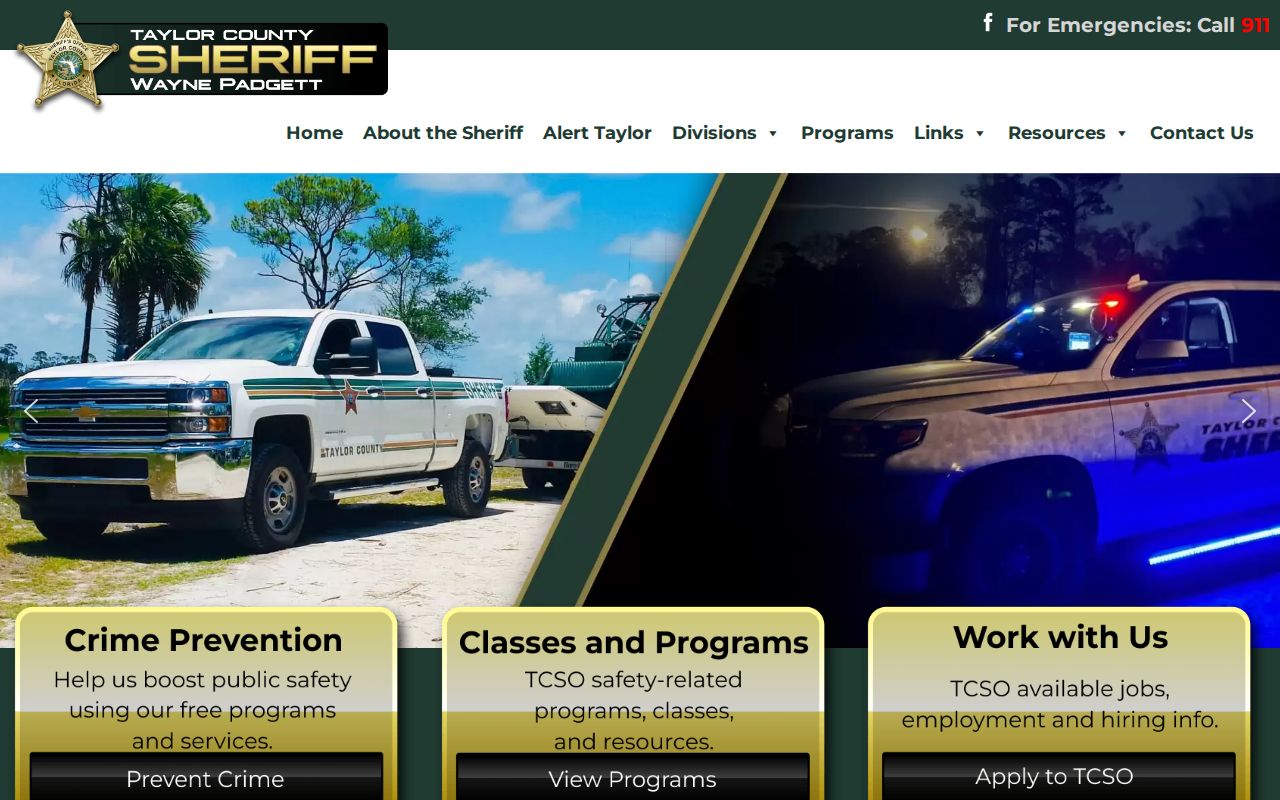
Call 850-584-4225 when the live tool fails or the exact custodian is unclear. Perry Police reports remain with PPD, even if TCSO booked the person.
What a Taylor County Criminal Record Shows
A record may contain names, aliases, birth date, demographic identifiers, state or FBI numbers, arrest agency, charge text, statute, filing date, docket events, disposition, and sentence. A Taylor case number organizes the court file; common suffixes include CF for Circuit felony, MM for misdemeanor, and CT for criminal traffic. Never infer an outcome from the initial charge.
| Name & Identifiers | Legal name, aliases, birth data, and record numbers |
|---|---|
| Arrest / Booking Data | Agency, intake date, booking charge, bond, and release |
| Charges & Statutes | Filed counts, degree, statute, and amendments |
| Disposition | Conviction, dismissal, acquittal, or nolle prosequi |
| Sentence | Custody, probation, fines, costs, or restitution |
| Custody / Supervision Status | Jail, FDC facility, release, or community supervision |
From Taylor Booking to Court
A Taylor arrest can create four records. The officer writes a report, the jail creates an intake sheet, the prosecutor reviews charges, and the clerk opens a court file after filing. Fingerprints and qualifying arrest data flow toward FDLE, while later dispositions should link back to the cycle. Delays and identifier gaps can leave a state result without its outcome.
Record flow: Arresting Agency › Taylor Jail › State Attorney › Taylor Clerk › FDLE
A person disappearing from the live jail roster may have been released or transferred. It does not mean the charge was dismissed. Use the dedicated Taylor County arrest history route for booking channels, then the clerk for the filed result.
Taylor County Custodian Check
When a search fails, identify who created the missing item. Ask TCSO for a deputy report, booking sheet, dispatch record, or sheriff warrant material. Ask Perry Police for a city officer's narrative. Ask the Taylor Clerk for the case index, charging document, docket, disposition, judgment, sentence, or certified copy. Ask FDLE about the statewide criminal-history cycle, and use FDC for state custody or felony supervision. A request sent to the State Attorney for a police narrative is usually misdirected because the prosecutor makes charging decisions but does not own the arresting agency's report.
For a public-record request, narrow the date and location, state the desired record and format, and ask for a cost estimate. A custodian can redact exempt victim, juvenile, medical, investigative, or personal data while releasing the nonexempt remainder. Request the statutory basis for a withholding. This source-by-source method is faster and more accurate than sending the same broad request to every Taylor County office.
Public Access Laws
Florida's Constitution and statutes favor inspection of nonexempt public records, while court files also follow the judiciary's access rule. A custodian may redact protected portions and charge allowed copy or extensive-use costs. Ask for an electronic copy, an estimate, and the exact exemption supporting each withholding.
Key Statutes:
Florida Constitution art. I, §24 establishes the public-record right, subject to specific exemptions.
Fla. Stat. §119.07 governs inspection, copies, custodian duties, and allowed costs.
Fla. Stat. §943.053 governs FDLE criminal-history dissemination.
Florida Rule 2.420 controls public access and confidentiality for court records.
Taylor County Warrant Checks
TCSO links searches for open and outstanding warrants. Confirm a result by calling 850-584-4225 because a public list may lag. The Taylor Clerk can confirm a Circuit or County Court capias and its case docket. FDLE Wanted Persons adds statewide assistance but is not a complete personal clearance.
Obtain the case number, issuing court, and bond status. Consult counsel and follow official surrender or hearing instructions instead of appearing unexpectedly based on web text. A paid fine or resolved missed appearance may take time to clear across systems, so retain the receipt or order and recheck.
Search warrants differ from arrest warrants and bench warrants. They may stay sealed while execution is sensitive. A capias often directs an arrest after a filing or failure to comply, and a missed Taylor County hearing can produce one. When personal liberty is at stake, do not rely on an old screen capture or an unofficial list. Confirm with both the sheriff and issuing court, then follow the instructions tied to the actual case.
Sealed, Expunged & Restricted
Florida sealing shields an eligible record from ordinary public access, while expunction generally directs covered agencies to destroy or expunge it, subject to FDLE's limited confidential retention and statutory exceptions. Ordinary relief begins with an FDLE eligibility certificate, then a petition in the Taylor court that handled the case. Certification does not guarantee a judge will grant relief.
Many juvenile records, protected victim information, confidential identifiers, active investigative material, and court-sealed documents may also be restricted. Obtain a certified Taylor Clerk disposition before evaluating relief. If an order is granted but an official portal still displays the case after implementation time, send the custodian the certified order and exact location of the entry.
Eligibility turns on the complete disposition, not the arrest label. A prior disqualifying conviction, adjudication of guilt, specified offense, earlier relief, or incomplete sentence can block the ordinary route. The petition package may require the eligibility certificate, affidavit, proposed order, and service on the State Attorney and other agencies. Ask the Taylor Clerk for the current filing and certification costs rather than relying on an old fee quote. Sealing and expunction also have statutory disclosure exceptions, so relief does not erase every duty to disclose to every authorized government body.
Taylor County Records at FDC
The Florida Department of Corrections Offender Search covers state prison and some community-supervision records. Search by name or the precise DC number, with race and sex filters available. It is not the Taylor County jail roster and may not show a new pretrial booking. The court judgment remains the clearest source for the sentence imposed.
The official FDC search shows the state form.
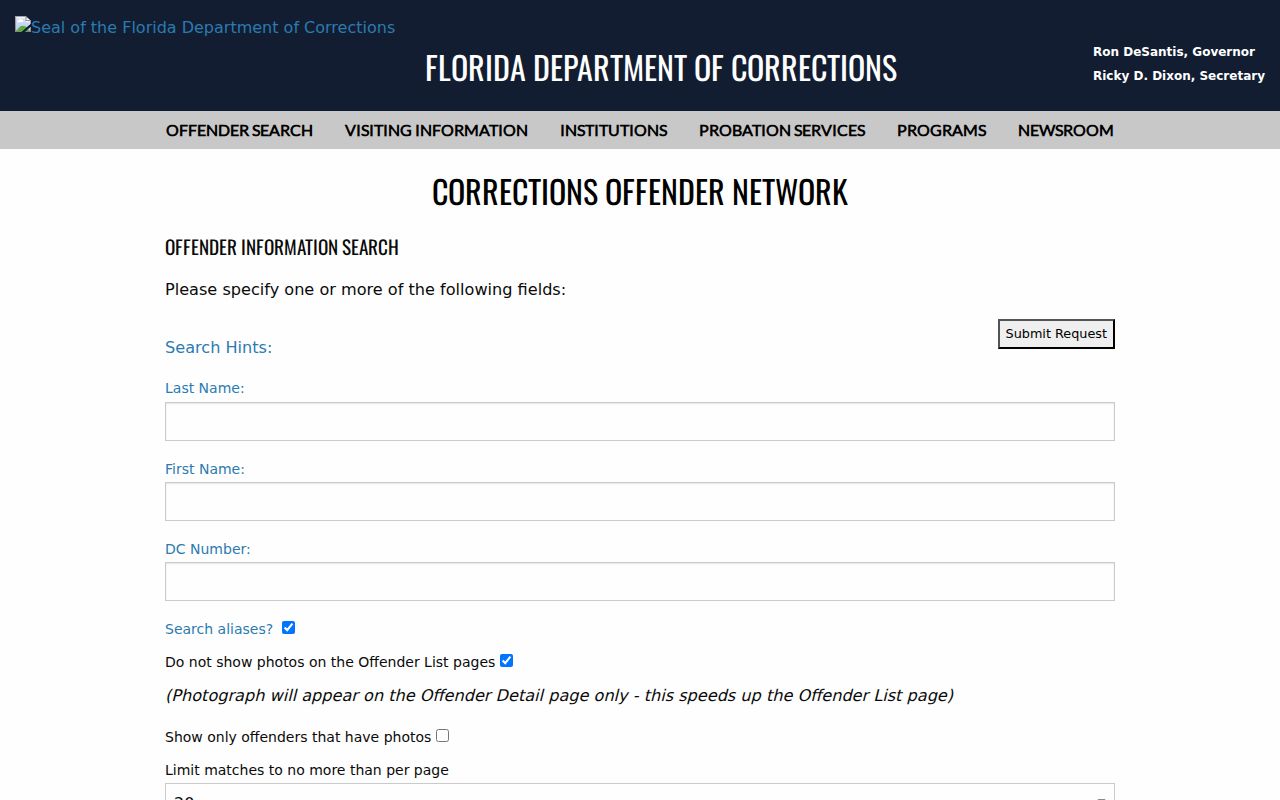
Use FDC after the clerk and jail layers when the question concerns prison custody, release, or felony community supervision.
FDLE also presents its full set of criminal-history record options.
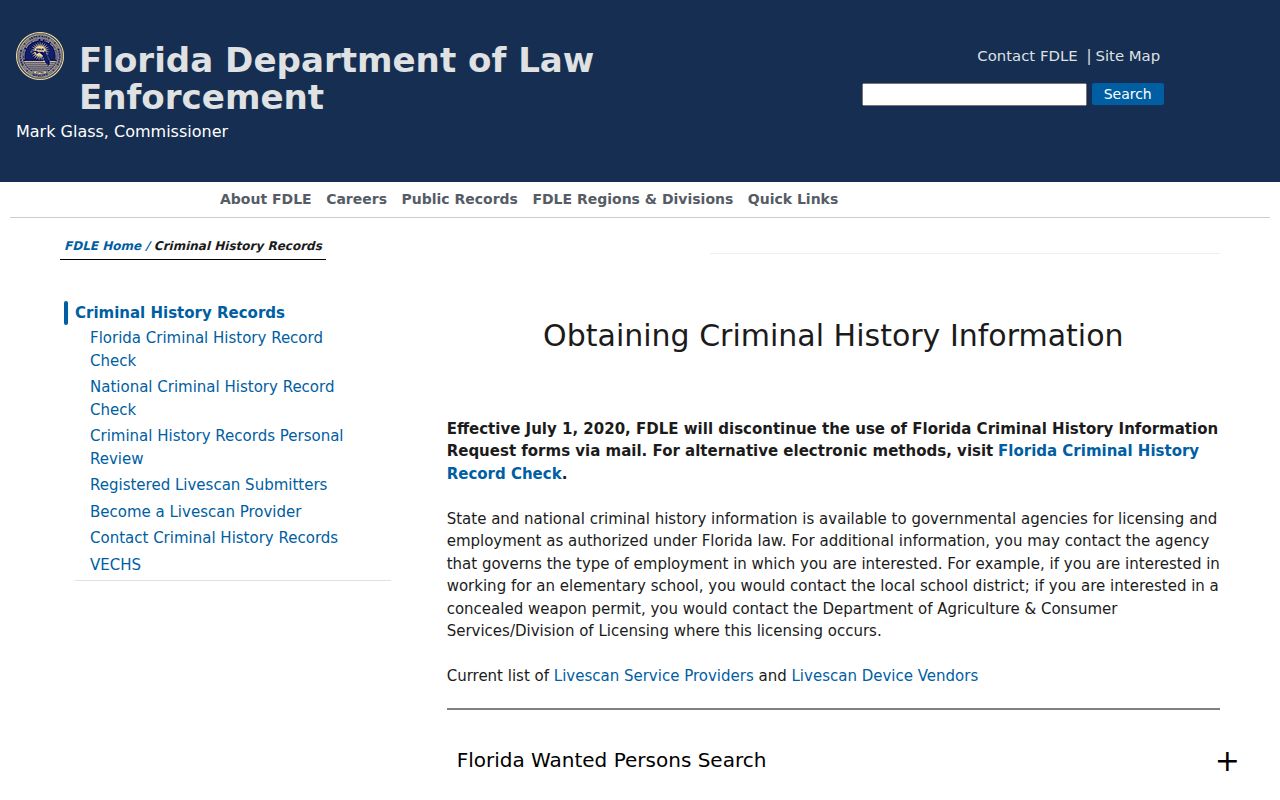
That source separates paid public name searches from personal fingerprint review and other official services.
Criminal Records by City in Taylor County
Perry is Taylor County's seat and only incorporated municipality. Perry Police keeps city-officer incident reports, but arrestees enter the county booking system and prosecutions route to the Taylor Clerk. No separate Perry criminal docket portal was found. Rural communities, including unincorporated Steinhatchee, use county channels unless FHP, FWC, or another agency made the arrest.
Perry Criminal History
6,898 residents in the 2020 Census · PPD reports route separately from Taylor booking and court files.
Taylor County Access by the Numbers
The Census counted 21,796 Taylor County residents in 2020 and estimated 21,210 in 2025. More than one-fifth of residents are age 65 or older. Those facts make phone and counter fallbacks important in a rural county where one web portal cannot supply the whole history.
The Census QuickFacts source supplies the county figures.
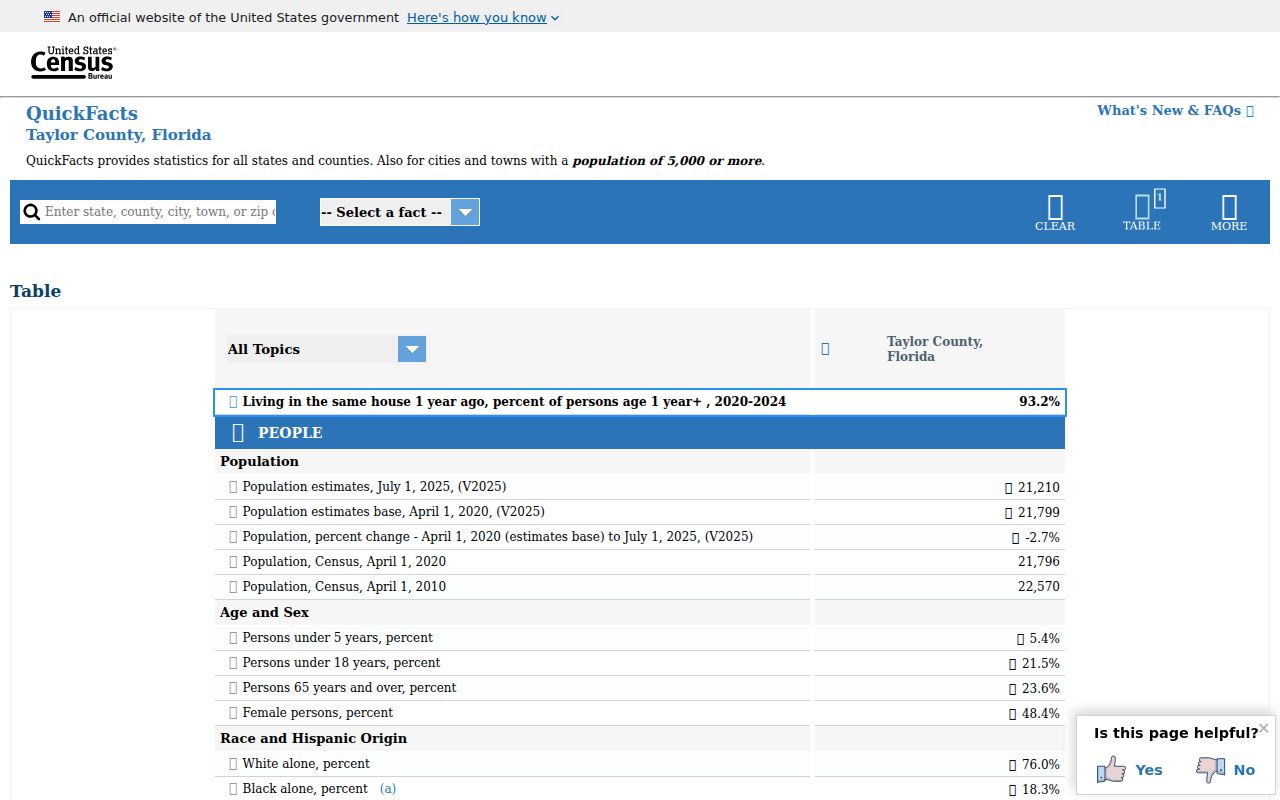
The population context also explains why Perry acts as the countywide records hub rather than one of several city systems. U.S. highways cross a broad unincorporated area, so FHP or FWC may create a report even when the person enters Taylor County Jail. Identify the arresting agency before asking for the narrative. TCSO cannot be assumed to own every report simply because it handled booking. The compact downtown offices simplify court and sheriff routing, but the State Attorney, jail operations, and Perry Police remain distinct record keepers.